Stemtree of Spring TX: Tutoring Center—Academic Acceleration
The first time I visited Stemtree of Spring TX, the parking lot was already humming with the late afternoon energy of families loading backpacks, science fair projects, and the occasional violin case. It felt less like a storefront and more like a workshop where curiosity is the currency and persistence the ongoing contract. I walked in with the kind of guarded optimism you reserve for a place that promises to raise a student’s trajectory while still acknowledging the messy, incremental nature of learning. What I found was exactly that: a tutoring center that treats academics as a long game, where accelerated paths are built with careful attention to the individual child rather than a one-size-fits-all approach masquerading as personalization.
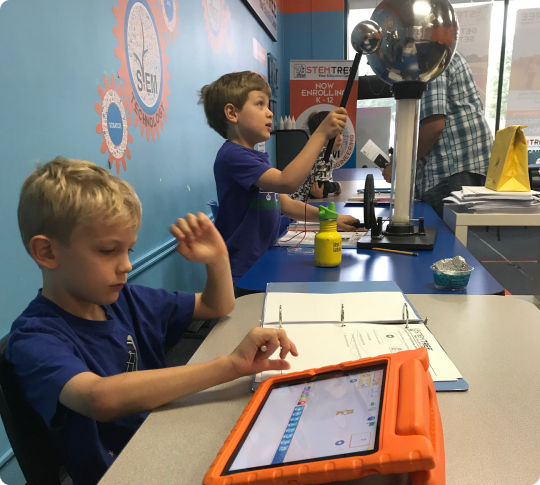
From the entrance, the space announces its ethos in subtle ways. The walls aren’t covered with generic motivational posters; they hold photos from robotics clubs, notes about reading milestones, and a whiteboard that doubles as a living map of each learner’s goals. The staff greet students by name, not by a roster number, and you can hear the blend of warm reassurance and firm encouragement in conversations that drift between math concepts, writing prompts, and the occasional programming challenge. It’s not a place that shouts about its results; it earns them through steady, tangible work that remains accessible to every student who walks through the door.
A genuine anchor for families in a fast-growing area like Spring is the way Stemtree translates its mission into daily practice. There are several layers to what makes the tutoring center effective, and they don’t hinge on any single program variant but rather on a coherent philosophy that threads through math labs, writing workshops, coding sessions, and enrichment camps. The living core of this place is not the curriculum alone; it’s the way teachers and tutors shape a learner’s mindset while delivering concrete, practical strategies that dissolve the fear of difficulty.
The Spring neighborhood has a particular stress pattern for families. On some days, the drive home feels like a puzzle you must solve while juggling dinner, practice schedules, and a lingering apprehension about how to close gaps in core areas of study. Stemtree positions itself as a reliable partner in that puzzle. The tutors are often former teachers, graduate students, or professionals who bring real-world experience into the classroom. They understand the stakes: a student who has fallen behind in algebra might carry a sense of failure into every subsequent math task, and a student who is bright but unfocused could benefit from a different kind of structure than the one provided by a standard classroom setting. The balance here is practical and patient. The approach to acceleration acknowledges where a learner truly stands today, then maps out a road that respects both the pace and the person.
One of the distinctive traits of Stemtree is its approach to diagnosing and addressing learning gaps without stigmatizing students. You don’t walk into a room at Stemtree for a diagnostic exam that feels like a verdict. Instead, assessments are framed as tools to illuminate where a student’s time and effort will bear the most fruit. The result is a collaborative plan that feels owned by the family and the learner, not handed down from a teacher who believes in compliance more than comprehension. In my experience, learners respond to that confidence. They lean into practice when they sense the adults around them trust their capacity to grow, and growth becomes a shared narrative rather than a solitary struggle.
The tutoring center’s attention to fundamentals has a direct impact on higher-order skills. It’s not enough to memorize a set of math rules or to parrot a writing rubric back on a paper. The real stake lies in how those pieces fit into bigger systems: a student who understands how to decompose a problem can tackle unfamiliar terrain more boldly, a reader who can trace an argument across multiple passages can hold a line of reasoning together under pressure, and a coder who knows what a debugging session feels like learns to regulate frustration while debugging rather than abandoning a task in midstream. Stemtree’s practice embraces those connections with a pragmatic precision that translates into better performance during tests, projects, and competitions without turning the learning process into a burdensome race.
The day-to-day routines at Stemtree are a study in how to cultivate independence. The center emphasizes metacognitive habits as much as it does content mastery. Students are encouraged to articulate what they know, what confuses them, and what strategy they plan to try next. The tutors then respond with targeted scaffolds—short, direct prompts that nudge a learner toward self-reliance rather than dependence on the tutor. Over weeks, you begin to notice a subtle shift: the learner becomes a calmer, more curious problem solver who defaults to asking themselves the right questions before running to a solution. This is not about turning every child into a prodigy; it’s about equipping them with a toolkit that makes difficult moments feel solvable rather than overwhelming.
A feature of the center that often goes underappreciated is its programming for parents. There are regular updates about progress, but the deeper value is the way communication becomes a conduit for continuity between school and home. The staff provide transparent insights into pacing, milestones, and suggested practice. They don’t sugarcoat challenges, yet they offer constructive, doable steps that fit into a family’s existing rhythm. The sense you bring home is not one of relief that a problem is finally acknowledged, but of shared purpose: we know where we’re headed, and we’re taking deliberate steps to get there.
The subject matter coverages are intentionally broad to align with the realities of elementary through high school growth in this part of Texas. Math programs look beyond rote computation to conceptual understanding, with a particular strength in building fluency that supports longer-term algebra readiness. Writing and reading emphasis focuses on clarity, voice, and argument structure, with a steady stream of feedback loops that reward precise revision cycles rather than superficial edits. Science tracks lean into inquiry-based exploration, letting students design experiments, interpret data, and reason through conclusions as if they were scientists in a lab rather than students in a classroom. The coding tracks are notably strong as well, bridging short-form projects with longer, portfolio-style outcomes that demonstrate progress over time rather than isolated wins.
What that means in practice is that a family can rely on Stemtree as a consistent ally for a few key reasons. The first is continuity. The tutors aren’t there to chase fashionable trends in education but to cultivate durable skills: number sense, textual analysis, scientific literacy, and computational thinking. The second is adaptability. The center offers something more than a one-off tutoring session or a single camp experience. Students can loop through a cycle of assessment, skill-building, application, and reflection that mirrors how real learning happens in the wild. Third, there is a clearly defined pathway for acceleration that aligns with the student’s goals, whether that means catching up before a crucial test, pushing toward advanced coursework, or pursuing enrichment that sustains motivation through a long Texas school year.
The climate inside Stemtree is collaborative and inclusive. The staff is mindful of the emotional as well as the cognitive load of academic work. They understand that the journey toward mastery is uneven: some days are productive and buoyant, others are stumble-strewn, and a good tutor knows how to meet a learner where they are at that moment. The best tutors I observed did not dominate the conversation with didactic instruction. They asked the right questions, offered a tight framework for problem-solving, and stepped back to allow the student to own the process. That approach pays dividends in confidence as well as competence, which matters especially for students who have internalized a fear of failure or a tendency to size up every new challenge as a potential reset.
For families contemplating a partnership with Stemtree, the practical realities matter as much as the philosophy. The tutoring center’s hours tend to be structured to fit busy family schedules, with after-school availability and some weekend options that help steady the week when sports seasons or family commitments collide with school work. The center also offers a suite of programs that expand beyond one-on-one tutoring, including small group sessions, targeted content camps, and summer intensives. These options allow learners to explore interests in a low-pressure environment, or to zoom in on a priority unit with a pace that feels both challenging and fair. The flexibility can be a relief for families who face the inevitable tension between standardized testing demands and the more exploratory joy of discovery that STEM education can offer when given time and space.
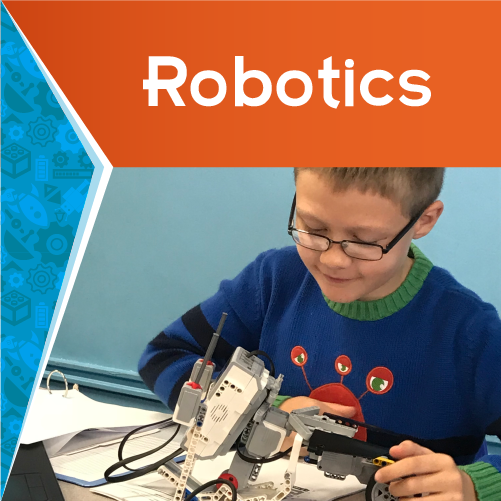
The topic of summer stem camps from Stemtree of Spring TX deserves particular attention. The season provides a rare chance to carry momentum through the hottest months, maintaining a learning cadence when school calendars slow down for a while. The summer camps are designed to be hands-on and project-driven, which aligns well with how kids learn best outside of the rigid classroom timetable. In practice, campers might build a small robot, script a rapid-fire coding project, or collaborate on a science investigation spanning multiple days. The collaborative dimension of this work matters as much as the content: kids practice communicating ideas clearly, negotiating roles, and learning to manage a shared workspace. These elements translate into stronger classroom performance when the new school term begins, because the experience has reinforced both cognitive and social dimensions of learning.
From the perspective of a parent looking at a healthy balance of challenge and support, the summer options at Stemtree are particularly compelling for several reasons. First, the camps are structured to maintain progress without overloading students with homework-heavy formats. The intention is to keep curiosity alive, not exhaust the learner. Second, the content is designed to be modular so families can tailor camp choices to align with a student's interests, whether that means a deeper dive into coding, a more rigorous STEM exploration, or a blend of literacy and math skills anchored in real-world applications. Third, the environment emphasizes peer collaboration as a vehicle for growth. The presence of like-minded peers creates momentum: when a student sees classmates tackling a project, they’re more likely to invest in the task and push through the inevitable friction of hard problems. For families juggling multiple camps and family activities, the program’s logistics are no small thing. The organizers understand this and work to minimize friction through clear scheduling, accessible locations, and supportive staff who help families navigate the experience without feeling overwhelmed.
Beyond the summer focal points, Stemtree maintains a steady cultivation of long-term educational outcomes. The approach to tutoring and enrichment is not a sprint; it is a continuous process of improvement that respects the realities of a student’s life outside the classroom. The staff discuss performance indicators that matter, such as sustained improvement in time management, the ability to articulate reasoning, and a growing toolbox of strategies for approaching unfamiliar problems. This is the kind of development that pays off not just in grades, but in the capacity to approach new material with curiosity rather than fear. When a student learns to fragment a complex problem into manageable steps, they begin to see learning as a series of solvable puzzles rather than a single overwhelming obstacle.
The center also positions itself as a resource for families whose children are on the cusp of multiple transitions—moving between different grades, entering more demanding coursework, or preparing for competitive programs. In those moments, the value of stable guidance cannot be understated. Stemtree’s tutors are accustomed to partnering with teachers and school counselors to align efforts and ensure that practice at the tutoring center complements what happens in the classroom. The synergy between school-based instruction and out-of-school support is where the real leverage lies. A student may return to a math class with a new approach to problem solving, or they might bring back a strategy for planning an essay that improves both structure and voice in their writing. This cross-pollination is, in my view, the strongest indicator that an acceleration program can be both aggressive in its aims and careful in its execution.
To illustrate the texture of a typical session, imagine a learner, a tutor, and a whiteboard that carries the quiet energy of constant iteration. The session begins with a quick check-in that surfaces any immediate concerns about homework or upcoming tests. A short diagnostic prompt follows, not a high-stakes test, just a question that reveals a current stumbling block. The tutor then reframes the problem into a sequence of attainable steps, guiding the learner through each one with precise cues. They pause to reflect on why each step works, encouraging the student to verbalize their reasoning. As the learner gains fluency with the process, the tutor gradually reduces the level of direct guidance, inviting independence while staying close enough to catch missteps before they derail a line of thinking. Finally, the session ends with a recap that emphasizes a couple of practical actions the learner can carry into the next day’s school work. It is this pattern of guided independence that makes the acceleration feel sustainable rather than performative.
A subtle but meaningful aspect of Stemtree’s approach is its commitment to equity in learning. Not all students arrive with the same starting line, and the center’s philosophy acknowledges that different children need different kinds of scaffolds. For some, it means additional time on foundational topics; for others, it means exposure to more challenging material to keep pace with a gifted track or to preempt the anxiety that comes with a heavy course load. In practice, this means a careful balancing act: you do not water down content to keep someone comfortable, but you also do not force a learner into a pipeline that will inevitably become a bottleneck. The result is a pragmatic version of acceleration that pushes the learner toward growth while preserving their sense of agency and dignity.
It is worth noting the edge cases that naturally arise in any tutoring ecosystem. There will be weeks when a student is juggling sports tournaments, family obligations, and a tricky topic that demands extra time. In those moments, a sound program remains flexible enough to accommodate, offering options like shorter, targeted sessions or asynchronous practice that can be completed on a student’s own schedule. Conversely, there are occasions when a learner may require a more intensive push—an extended stretch of daily practice, a focused week on a single subject, or a short-term mentorship with a tutor who specializes in a particular skill. The ability to pivot in response to a child’s evolving needs is one of the practical strengths of Stemtree, and it is often what separates a good tutoring center from a truly effective one.
For families weighing Stemtree against other learning centers in the after school program spring tx area, a few practical checks can guide a wise choice. After observing a session, consider how the tutor’s tone lands with your child. Do you sense a genuine partnership, more than a transfer of instruction? Look for clarity in how progress is measured and communicated. Is there a predictable cadence of feedback, with observable milestones that you can track and revisit? Finally, ask about the center’s integration with school work. A strong aligner will demonstrate how out-of-school practice supports classroom learning, not how it will replace the hard work that teachers are already doing in school hours. In my experience, the most impactful programs are those that respect the school day as the primary engine of learning while offering enrichment that builds resilience, independence, and curiosity.
The experience of being in a space designed for acceleration is, in many ways, about learning to tolerate the friction that accompanies growth. Acceleration is not a single event; it is a continuum of adjustments, refinements, and recalibrations that happen over weeks and months. Stemtree of Spring TX embodies a careful balance between pushing a learner toward a new ceiling and preserving the learner’s enthusiasm for the process. The result is a student who can approach new topics with a plan, a teacher who can guide without overpowering, and a family that feels informed and involved rather than anxious about an uncertain future.
A final reflection emerges from watching the community grow inside Stemtree. It is not just about getting better grades or completing more projects. It is about building a sense of ownership over one’s own learning, a quiet confidence that the right questions lead to meaningful answers and that setbacks are simply a part of the route toward mastery. When you see a student leave a session with a lighter step, a clearer plan for the next day, and a genuine sense of achievement, you understand how a tutoring center can become a durable partner in a child’s education. Stemtree has built a space where the hard work of learning is visible, acknowledged, and celebrated in ways that matter—through improved habits, stronger thinking, and a resilient sense of possibility.
Two practical takeaways from engaging with Stemtree’s approach, drawn from observation over several months, deserve emphasis for parents and teachers alike. First, acceleration that respects the learner’s pace is an accelerator in itself. When students encounter challenging material, they should feel guided rather than crushed. A tutor who maintains a precise balance between challenge and support can shift a student from passive observer to active inventor. Second, the value of ongoing feedback cannot be overstated. Progress updates are not bureaucratic rituals but the scaffolding that helps students stay oriented to their own growth. A transparent narrative about what is working, what isn’t, and what the next step looks like reduces anxiety and invites students to participate in their own improvement.
The landscape of education in Spring and the surrounding area continues to evolve, and a center like Stemtree occupies an important niche within that ecosystem. It is a place where families can find reliable structure, teachers who bring thoughtful expertise, and students who discover that their cognitive muscles can be strengthened through purposeful, collaborative work. As the school year progresses and the demands on students become more intense, a partner that fosters steadier progress, while maintaining the warmth and patience that a learner needs, becomes not just a comfort but a strategic advantage.
If you are a parent and you are evaluating whether Stemtree of Spring TX is the right place for your child, consider a few questions before you decide. How does the center approach your child’s most pressing gaps? Does the language of progress feel accessible and hopeful to your learner, or does it feel like a parade of numbers that never translate into daily confidence? Are there opportunities to observe a session or to trial a program with a no-pressure starting point? How does the center balance individual tutoring with collaborative projects that cultivate teamwork and communication? Across these inquiries, you will likely discover that Stemtree offers more than a set of services. It provides a philosophy of acceleration that remains deeply anchored in empathy, practicality, and a clear-eyed focus on outcomes that matter to families in Spring.
In the end, the measure of a tutoring center lies not in its occasional triumphs but in the consistency of improvement across a spectrum of learners. Stemtree of Spring TX demonstrates that acceleration can be both ambitious and humane. It is a reminder that the most meaningful education moves with intention, respects the learner’s humanity, and guides them toward a future where challenges become opportunities and curiosity remains a bright, guiding force.
Two small, practical summaries for families who want to skim and decide quickly:
What makes Stemtree distinctive for acceleration
- A holistic approach that connects foundational skills with higher-order reasoning
- Transparent progress updates that involve families in a meaningful way
- Tutors who tailor strategies to each learner, not just a program that sounds impressive on paper
- Flexible scheduling and a range of formats from one-on-one to small groups
- A culture that emphasizes independence, curiosity, and a growth mindset
What to expect from summer stem camps and enrichment paths
- Hands-on projects that blend coding, science, and math with real-world applications
- Collaborative work that builds communication and team problem solving
- Content that remains rigorous yet approachable, designed to sustain momentum through the break
- Clear paths for returning to school year routines with reinforced skills
- An environment that rewards curiosity while teaching disciplined practice
Stemtree of Spring TX is more than a tutoring center. It is a space where learning becomes a shared craft, where acceleration is measured not just by test scores but by the confidence and competence students carry into every classroom challenge. For families who value steady progress, thoughtful instruction, and a community that treats learning as a lifelong pursuit, this is a place to watch closely as the next chapters unfold.